
Soups & Stews
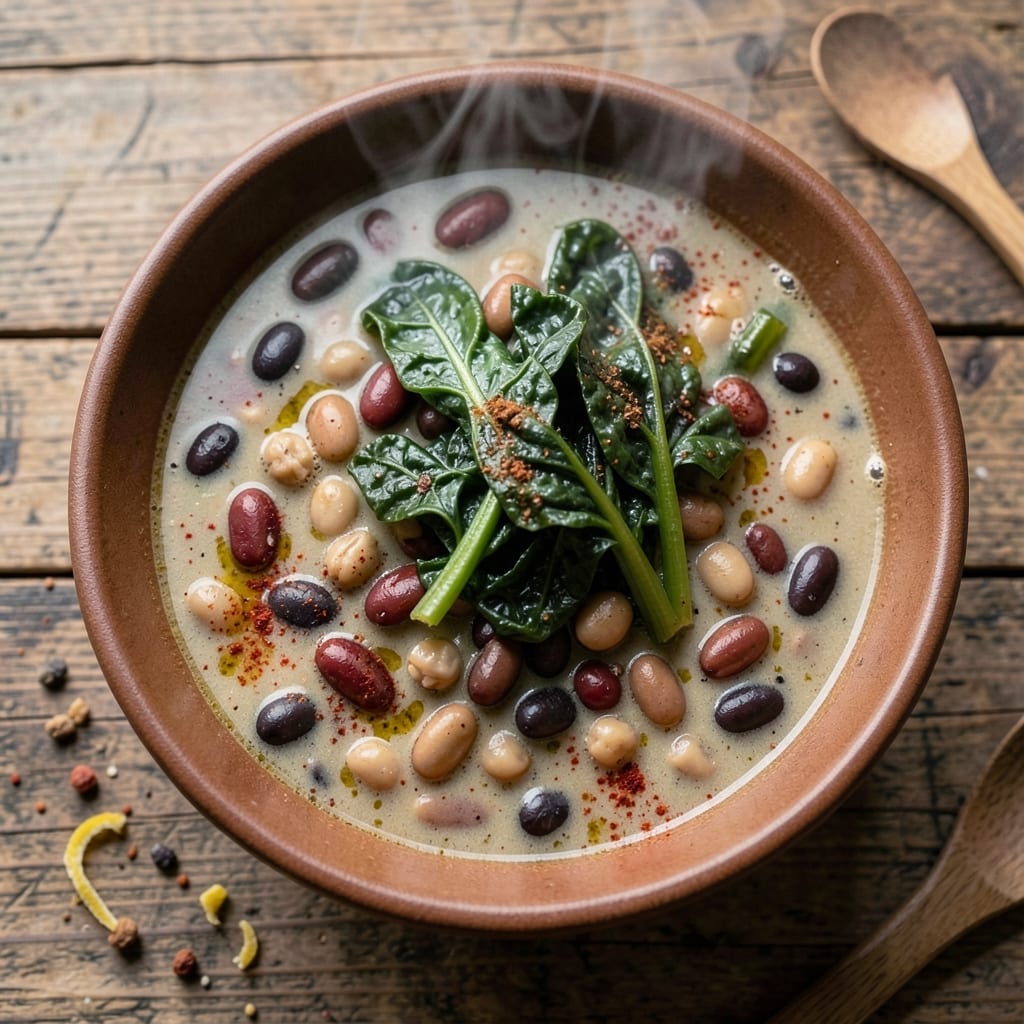
This 15 bean soup with collards recipe delivers the soul-warming comfort of Southern cooking in a single pot, packed with 15 varieties of beans and hearty collard greens. The slow simmer transforms tough beans into tender, flavorful bites while developing deep, savory notes that make every spoonful satisfying. I’ve perfected this version to be vegetarian-friendly (though traditional recipes often include ham hocks), with a rich broth that’s both nourishing and deeply flavorful.
The secret to this soup’s success lies in the slow simmer—at least 6 hours on low heat—where flavors meld and the beans soften just enough to be tender without falling apart. A splash of apple cider vinegar brightens the broth, while smoked paprika adds a subtle depth that ties everything together. The collards wilt into the soup, infusing it with their earthy sweetness and creating a texture that’s both hearty and comforting.
What you’ll end up with is a deeply flavorful, one-pot meal that’s perfect for chilly days or family gatherings. The soup is rich enough to stand alone but pairs beautifully with cornbread or crusty bread to soak up every last drop. It’s the kind of dish that tastes even better the next day, as the flavors continue to develop and deepen.
For an extra layer of richness, stir in a pat of butter or a sprinkle of sharp cheddar at the end—though this recipe works just as well without them. Whether you’re serving it as a main course or a side, this 15 bean soup with collards is a foolproof way to bring Southern comfort to your table.
Ingredients for 15 bean soup recipe with collards
Fifteen varieties of beans and collards—this is your pantry raid checklist for Southern comfort in one pot.
| Ingredient | Amount | Notes |
|---|---|---|
| Dried Navy Beans 🌱 | 1 cup | Rinsed before adding |
| Dried Pinto Beans 🌱 | 1 cup | Rinsed before adding |
| Dried Black Beans 🌱 | 1 cup | Rinsed before adding |
| Dried Great Northern Beans 🌱 | 1 cup | Rinsed before adding |
| Dried Kidney Beans 🌱 | 1 cup | Rinsed before adding |
| Dried Chickpeas 🌱 | 1 cup | Rinsed before adding |
| Dried Lentils 🌱 | 1 cup | Green or brown preferred |
| Dried White Beans 🌱 | 1 cup | Cannellini or great northern |
| Dried Lima Beans 🌱 | 1 cup | Butter beans work too |
| Dried Red Beans 🌱 | 1 cup | Rinsed before adding |
| Dried Split Peas 🌱 | 1 cup | Yellow or green preferred |
| Dried Anasazi Beans 🌱 | ½ cup | Or substitute pinto beans |
| Dried Fava Beans 🌱 | ½ cup | Optional for extra texture |
| Dried Butter Beans 🌱 | ½ cup | Substitute for lima beans |
| Fresh Collard Greens 🥬 | 1 lb | Stemmed and chopped |
| Yellow Onion 🧅 | 1 whole | Diced, medium size |
| Celery Stalks 🥬 | 3 whole | Diced, about 1 cup |
| Carrots 🥕 | 3 whole | Peeled and chopped |
| Garlic Cloves 🧄 | 4 cloves | Minced or crushed |
| Smoked Paprika 🌶️ | 2 tsp | Adds deep smoky flavor |
| Ground Cumin 🌿 | 1 tsp | Toasted for deeper flavor |
| Dried Thyme 🌿 | 1 tsp | Or 1 tbsp fresh |
| Bay Leaves 🍃 | 2 whole | Removed before serving |
| Apple Cider Vinegar 🍎 | 2 tbsp | Brightens the broth |
| Vegetable Broth 💧 | 8 cups | Low-sodium preferred |
| Salt 🧂 | 1 ½ tsp | Adjust to taste |
| Black Pepper 🌶️ | ½ tsp | Freshly ground preferred |
| Olive Oil 🫒 | 2 tbsp | For sautéing vegetables |
The beans are the heart of this soup, so don’t skimp on variety. Bob Evans or Whole Foods bulk bins are great for grabbing multiple types at once, but any grocery store carries the basics. Look for beans that are plump and free of debris—dried beans last for years if stored properly, so bulk buys pay off. I always grab extra collard greens since they wilt down significantly; Trader Joe's sells them pre-washed for convenience. The key is mixing textures—some beans stay firm, others get creamy, and that’s what makes it interesting.
No smoked paprika? Regular paprika plus a pinch of liquid smoke works in a pinch. Short on one bean variety? Substitute any other white bean—they all play nicely together. Fresh thyme is ideal, but dried at one-third the amount gets you close. The vegetable broth can be homemade (simmer onion, carrot, celery, and garlic for 30 minutes) or store-bought—just watch the sodium. For extra depth, add a dash of miso paste with the vinegar, though it’s not traditional.
This soup tastes even better the next day—flavors meld beautifully overnight. Store in the fridge for 5-6 days or freeze portions for up to 3 months. I like to portion it into containers so lunches are ready to grab. For serving, a sprinkle of sharp cheddar or a pat of butter adds richness, though it’s delicious as-is. The collards can be added at the end for wilted greens, or chopped and simmered in for more texture.
Why You'll Love This Recipe
- No-Soaking Needed: I’ll be real—soaking beans is a hassle. This soup skips it entirely. Just toss those dried beans (navy, pinto, black, great northern, kidney) into a pot with broth, and let them simmer until tender. No extra steps, no waiting around.
- Collards That Sing: Between us, the collards are the star. They wilt down into tender, slightly bitter greens that soak up the smoky-sweet bean broth like a sponge. That first bite? Rich, earthy, and just salty enough to make you reach for seconds.
- Weeknight Crowd-Feeder: Honestly, this is my go-to when I’ve got a house full. It stretches across five types of beans, so it’s hearty enough to fill plates for six (or more, if you’re feeding teenagers). Serve it with cornbread, and you’ve got a full meal without the fuss.
- Leftovers That Taste Better: Here’s what sold me—this soup actually improves overnight. The flavors meld into something deeper, the beans get even softer, and the collards hold their texture perfectly. Reheat a bowl for lunch, and it’ll taste like you slaved over it. (Spoiler: You didn’t.)
Step-by-step instructions for slow-simmered 15 bean soup with collards
Here's how to create a hearty, flavor-packed bean soup that simmers into rich perfection.
Prepare and Soak the Beans
Combine all the dried beans in a large bowl and pick through them to remove any debris. Rinse each type thoroughly under cold water until the water runs clear. This removes any dust or impurities that could make the soup cloudy.
Transfer the rinsed beans to a large pot and cover them with plenty of cold water—at least 3 inches above the beans. Let them soak overnight, or for at least 8 hours. This long soak ensures they cook evenly and become tender without splitting. I like to add a pinch of salt to the soaking water, but don't overdo it—just enough to season the water lightly.
Sauté the Vegetables and Spices
Drain the soaked beans and set them aside. In a large Dutch oven or heavy pot, heat the 2 tablespoons olive oil over medium heat. Add the diced yellow onion, chopped celery stalks, and peeled carrots. Cook for 5-7 minutes, stirring occasionally, until the vegetables soften and the onion becomes translucent.
Add the minced garlic cloves, 2 teaspoons smoked paprika, 1 teaspoon ground cumin, and 1 teaspoon dried thyme. Stir for 1 minute until the spices are fragrant and the garlic is golden but not burnt. This step builds the flavor foundation for the entire soup.
Combine Everything and Simmer
Return the drained beans to the pot and add the 8 cups vegetable broth, 2 tablespoons apple cider vinegar, 1.5 teaspoons salt, and 0.5 teaspoon black pepper. Stir well to combine. Bring the mixture to a boil over high heat, then reduce the heat to low and add the 2 whole bay leaves. Cover the pot and let it simmer gently for 1.5 hours. Stir occasionally to prevent the beans from sticking to the bottom.
After 1 hour, check the beans for doneness. They should be tender but still hold their shape. If they're not quite soft enough, continue simmering for another 30 minutes. The beans are ready when they're fork-tender but not mushy.
Add the Collards and Finish Cooking
Stir in the 1 lb chopped collard greens and simmer uncovered for another 20-30 minutes, until the greens are tender and the soup has thickened slightly. The collards should wilt down and become vibrant green, adding a rich, earthy flavor to the soup.
Taste the soup and adjust the seasoning if needed. Remove the bay leaves before serving, as they can be bitter. The soup should be hearty and flavorful, with a balance of smoky, earthy, and slightly tangy notes from the vinegar.
Rest and Serve
Let the soup rest for 10-15 minutes off the heat. This allows the flavors to meld and the soup to thicken slightly as it cools. Serve it hot, topped with a drizzle of olive oil or a sprinkle of smoked paprika for extra flavor. Each bowl should be packed with tender beans, tender collards, and a rich, aromatic broth that's perfect for a comforting meal.
Pro Tips For Making 15 Bean Soup Recipe With Collards
- SOAK BEANS SEPARATELY: Pinto beans and kidney beans need longer soaking—give them 8+ hours or overnight. Navy and Great Northern? Just 2 hours in hot water. I learned this the hard way when my kidney beans stayed rock-hard while everything else turned mushy.
- TRIM COLLARDS LIKE A PRO: Strip collards into 1-inch pieces and remove tough stems—don’t skip this. My grandmother swore by this: "Thin stems just sit there like little sticks." Use a sharp knife and work in batches to avoid sloppy piles.
- WATCH THE HEAT ON COLLARDS: Start collards in cold water, then bring to a simmer. Boiling them too fast makes them turn bitter and slimy. I was skeptical until I tried it—now my soup’s greens stay tender and bright.
- SALT THE BEANS LATE: Add salt only after the beans have simmered for 30 minutes. Salting too early makes them tough. I used to rush this, but now I wait—it guarantees creamy texture in every bean.
Essential equipment for great 15 bean soup recipe with collards
Dutch Oven Essentials
A large Dutch oven is your best friend for this recipe—I use my Le Creuset 6-quart because it distributes heat evenly and handles the long simmer beautifully. The deep sides prevent spills when stirring, and the heavy base maintains consistent low heat for even cooking. If you don’t have one, a heavy-bottomed stockpot (like All-Clad) works too—just avoid thin aluminum pots that can’t handle prolonged simmering. 🔥
Bean Prep Tools
Start with a fine-mesh colander for rinsing beans—it catches debris better than a regular strainer. I like the OXO Good Grips model because it’s sturdy and easy to clean. For soaking, use a large bowl (like a 5-quart ceramic or stainless steel) that can hold all the beans submerged. A wooden spoon helps stir gently during the long simmer to prevent sticking. Avoid metal spoons that can scratch the pot.
Knife and Cutting Gear
Chopping 1 lb of collards and 3 carrots efficiently requires a sharp 8-inch chef’s knife—I recommend Wüsthof’s Classic for precision. A cutting board (like Maple Holzer) prevents slipping, and a mandoline speeds up veggie prep if you’re making multiple batches. For garlic, a garlic press saves time over mincing by hand. Always keep your knife sharp—dull blades crush spices instead of chopping cleanly.
Measuring and Spice Help
Precision matters with 15 bean varieties and spices like smoked paprika and ground cumin. Use a stainless steel measuring cup (like Farberware) for broth and a spice grinder (like Penzeys Spice Grinder) to toast cumin seeds fresh before grinding. A digital kitchen scale helps measure beans by weight if you’re feeling fancy—1 cup dried beans typically weighs about 180 grams. For vinegar, a small squeeze bottle makes it easy to measure 2 tbsp apple cider vinegar without spills.
Broth and Storage
If making vegetable broth from scratch, a fine-mesh strainer (like OXO Good Grips) separates solids effortlessly. For storage, glass mason jars (like Ball Mason) preserve flavor better than plastic containers. Label with dates—this soup tastes best 2-3 days post-simmer. A ladle with a strainer (like OXO Stainless Steel) helps serve portions without collard stems. 💫
Nutrition facts
Frequently asked questions
Can I substitute any of the 15 bean varieties?
The key is maintaining a mix of textures and colors. Substitute any missing beans with similar types—like swapping lima beans for butter beans or kidney beans for black beans. Just ensure you have a good balance of white, black, and colored beans for visual appeal and flavor variety. The collards will still shine as the star green element.
How long should I soak the beans for best results?
For perfect tenderness, soak all dried beans overnight (8-12 hours) in plenty of cold water. This ensures even cooking and prevents tough spots. Pro tip: Add a pinch of salt to the soaking water to enhance flavor, but don't overdo it—just enough to taste. Drain and rinse thoroughly before cooking.
Why does my soup taste bland after simmering?
This usually happens when the broth lacks depth or seasoning. Boost flavor by adding a 1-inch piece of kombu seaweed during simmering (remove before serving) or a splash of soy sauce at the end. Also check your salt—this hearty soup needs 1.5-2 tsp total (adjust to taste). A final drizzle of apple cider vinegar brightens the broth beautifully.
Can I make this soup in a slow cooker?
Yes! Follow the same prep steps, then combine everything in your slow cooker and cook on low for 8-10 hours or high for 5-6 hours. The long cook time works perfectly for developing those deep flavors. Just add the collards in the last 30 minutes of cooking so they don't turn mushy.
What's the best way to store leftovers?
Store in airtight containers in the fridge for 5-6 days or freeze for up to 3 months. The flavors actually improve overnight! When reheating, add a splash of water or broth to prevent thickening. For serving, a sprinkle of smoked paprika or hot sauce revives the flavors beautifully.