
Soups & Stews
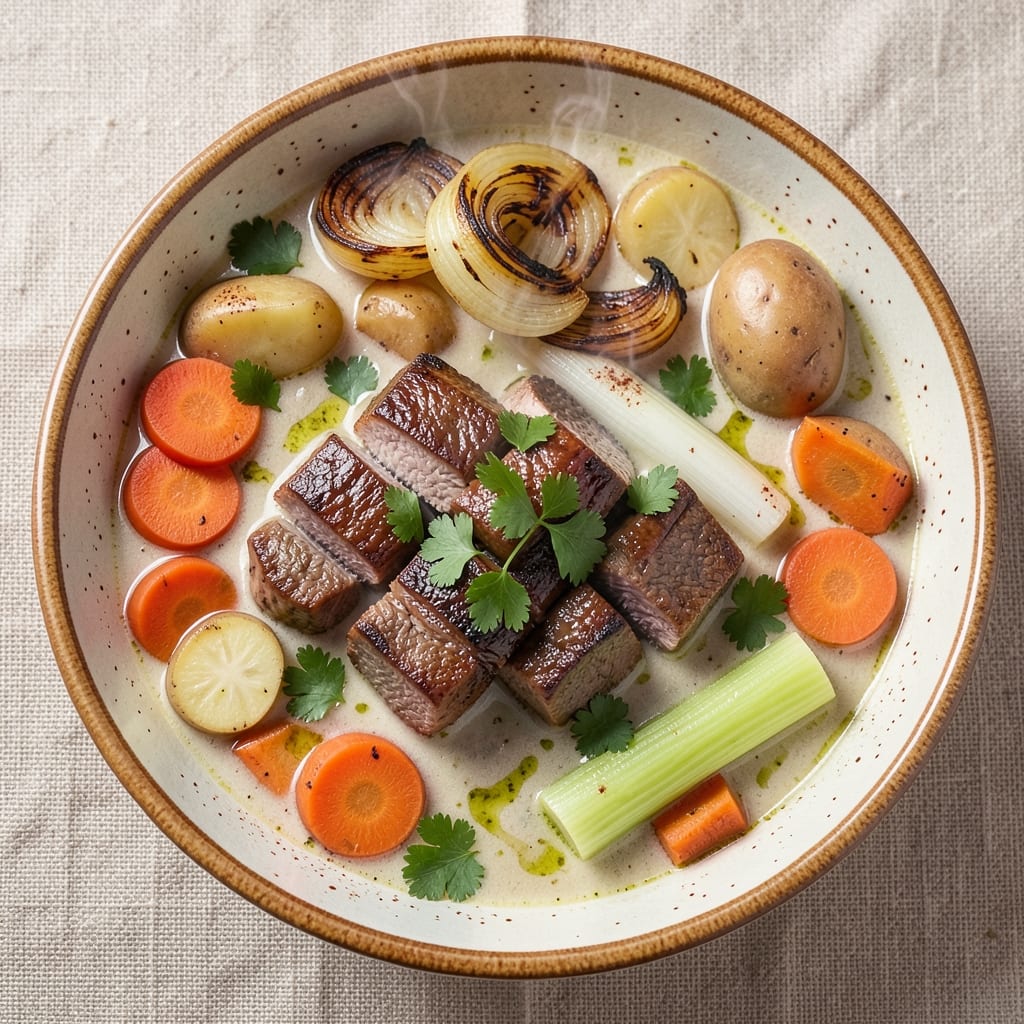
This 10-vegetable beef soup transforms a simple pot of broth into a hearty winter stew packed with umami-rich beef and vibrant vegetables. The secret lies in slow-cooked beef that melts in your mouth and a carefully layered broth that balances deep savory notes with fresh vegetable brightness. What makes this recipe stand out is the textural contrast—tender beef, crisp vegetables, and silky broth all working together in perfect harmony.
Start with a rich beef base—seared to develop deep flavor before simmering low and slow. Then layer in 10 different vegetables, each chosen for its unique texture and flavor profile, from hearty carrots to delicate mushrooms. The aromatic foundation of onions, garlic, and celery forms the backbone of the broth, while herbs like thyme and bay leaves add subtle complexity. This isn’t just soup; it’s a comforting, restaurant-quality meal that feels like a hug in a bowl.
The result is a deeply flavorful, nutrient-packed stew that’s as satisfying as it is nourishing. The beef becomes fork-tender while retaining moisture, and the vegetables stay bright and crisp without turning mushy. Every spoonful delivers a perfect balance of savory, sweet, and earthy notes, making it ideal for chilly evenings or meal prep. Whether you’re feeding a crowd or saving leftovers for days, this soup delivers consistent, foolproof results every time.
Best of all, this recipe is adaptable to any kitchen—no fancy equipment required. With a few simple techniques and a little patience, you’ll have a hearty, umami-packed stew that rivals your favorite restaurant dish. Let’s get started on creating this winter essential that’s as comforting as it is delicious.
Ingredients for 10 vegetable beef soup
Pantry staples meet fresh produce for this deeply satisfying, umami-rich winter stew.
| Ingredient | Amount | Notes |
|---|---|---|
| Chuck Roast 🥩 | 2 ½ lb | Cut into 1-inch cubes |
| Yellow Onions 🧅 | 2 whole | Chopped into 1/2-inch pieces |
| Carrots 🥕 | 1 ½ lb | Medium size, peeled and chopped |
| Celery Stalks 🧄 | 4 whole | Chopped into 1/2-inch pieces |
| Russet Potatoes 🥔 | 2 lb | Medium size, peeled and cubed |
| Sweet Potatoes 🍠 | 1 ½ lb | Medium size, peeled and cubed |
| Mushrooms 🍄 | 8 oz | Cremini or white, sliced |
| Zucchini 🍆 | 1 ½ lb | Medium size, sliced into half-moons |
| Green Beans 🌱 | 1 lb | Trimmed and cut into 1-inch pieces |
| Cauliflower 🥬 | 1 head | Cut into 1-inch florets |
| Garlic Cloves 🧄 | 6 cloves | Minced |
| Fresh Thyme 🌿 | 2 tbsp | Chopped leaves only |
| Bay Leaves 🍃 | 2 whole | Dried |
| Beef Broth 💧 | 6 cups | Low-sodium preferred |
| Tomato Paste 🍅 | 2 tbsp | Smooth, not chunky |
| Worcestershire Sauce 🍶 | 1 tbsp | Vegetarian version if needed |
| Olive Oil 🫒 | ½ cup | Extra-virgin for richness |
| Salt 🧂 | 1 ½ tsp | Diamond Crystal kosher |
| Black Pepper 🌶️ | 1 tsp | Freshly ground |
The beef is the foundation—chuck roast delivers that melt-in-your-mouth texture when cooked low and slow. Grab it from Costco or your local butcher for the best quality; look for good marbling. If you can't find chuck, brisket works too. For the vegetables, farmers markets have the freshest picks, but grocery store produce is fine if it's firm and vibrant. The mushrooms? Cremini or white—avoid those pre-sliced ones in the clamshell, they lose flavor fast. Sweet potatoes should be firm with no soft spots, and zucchini should be heavy for their size—signs of freshness that make all the difference in this hearty soup.
No fresh thyme? Dried works at half the amount, but fresh is ideal for that bright herbal note. Worcestershire sauce giving you pause? Vegetarian version or soy sauce keeps the umami depth. Short on beef broth? Water plus 1 bouillon cube gets you close, but homemade is worth the effort. The tomato paste can be the squeeze tube kind from Trader Joe's—no waste, and it keeps forever. For the vegetables, pre-cut options save time, but chopping your own ensures better texture. The key is layering flavors: start with the aromatic base, then add the heartier veggies, and finish with the delicate ones like green beans and cauliflower so they stay crisp.
This soup tastes even better the next day—4-5 days in the fridge, 3 months frozen. I double the recipe and freeze half for lazy winter nights. For freezing, cool the soup completely first, then portion into airtight containers with a little headspace. Reheat gently on the stove, stirring occasionally, until piping hot. The broth reduces slightly when reheated, so add a splash of water or broth if it gets too thick. Leftovers make fantastic lunches—just grab a thermos and go.
Why You'll Love This Recipe
- One-Pot Magic: I swear by this recipe—just toss everything into a Dutch oven and walk away. The chuck roast practically melts into tender shreds while the veggies soften, and honestly? That’s my kind of cooking where cleanup is just wiping a spoon.
- Rich, Deep Roots: The onions caramelize into sweetness, carrots add natural sweetness, and the celery brings that earthy backbone—like a hug in a bowl. Between us, the slow-cooked beef turns this into something restaurant-worthy without trying too hard.
- Leftovers That Beg: This soup tastes better the next day, and I’m not lying. The flavors meld into this cozy, hearty goodness that’s perfect for lunchboxes or reheating with a sprinkle of fresh parsley. My kids fight over the leftovers (yes, even my picky eater).
- Budget-Friendly Feast: Chuck roast stretches across meals, and the veggies? They’re the affordable kind that don’t break the bank. I’ve fed six people for under $15 with this—no fancy ingredients, just pure, satisfying comfort food that doesn’t skimp on flavor.
Step-by-step instructions for hearty vegetable beef stew
Transform humble ingredients into a rich, umami-packed stew that warms the soul.
Sear the Chuck Roast for Deep Flavor
Heat the 0.5 cup olive oil in a large Dutch oven over medium-high heat until shimmering. Working in batches if needed, add the 2.5 lb chuck roast cut into 1-inch cubes, letting them sear undisturbed for 3-4 minutes per side until deeply browned. This step develops the Maillard reaction, creating that irresistible meaty depth that carries through the entire soup.
As the roast browns, you'll notice the oil bubbling vigorously and the meat developing a rich caramelized crust. Transfer the seared roast to a plate and set aside. Don't skip this step—it's the flavor foundation of your stew. If your pan gets too crowded, work in batches to maintain proper heat control.
Build the Vegetable Base with Aromatics
In the same Dutch oven, add 2 whole yellow onions chopped into ½-inch pieces, 1.5 lb carrots chopped, 4 whole celery stalks chopped, and 6 cloves garlic cloves minced. Cook for 5-6 minutes, stirring occasionally, until the vegetables soften slightly and the onions become translucent. This creates a flavorful base that will infuse into the broth.
Here's where the magic happens: the onions should release their natural sweetness while the carrots and celery develop a subtle caramelization. Add 2 tbsp fresh thyme and 2 whole bay leaves at this stage—the thyme will release its piney aroma while the bay leaves add that classic herbal depth. Stir in 2 tbsp tomato paste and cook for another 1 minute to deepen the umami profile.
Simmer the Meat and Vegetables
Return the seared chuck roast to the pot along with 6 cups beef broth and 1 tbsp Worcestershire sauce. Bring to a gentle boil, then reduce heat to low and let it simmer uncovered for 1.5 hours. This long simmering time is crucial—it allows the meat to become fork-tender while the flavors meld together beautifully. You'll notice the broth gradually darkening and developing a rich, meaty aroma.
After 1 hour, add 2 lb russet potatoes and 1.5 lb sweet potatoes cut into 1-inch cubes. These starchy vegetables will absorb the flavorful broth while adding hearty texture. Continue simmering for another 30 minutes, stirring occasionally to prevent sticking. The potatoes should be tender but not falling apart—this ensures they hold their shape in the final soup.
Add Delicate Vegetables and Finish
After the potatoes are tender, add 8 oz mushrooms sliced, 1.5 lb zucchini sliced into half-moons, 1 lb green beans cut into 1-inch pieces, and 1 head cauliflower cut into 1-inch florets. Simmer for 20-25 minutes until all vegetables are fork-tender but still hold their shape. The zucchini and green beans should be bright green and just tender, while the mushrooms should be fully cooked through.
Season with 1.5 tsp salt and 1 tsp black pepper, adjusting to taste. Taste the soup and consider whether it needs more acidity or depth—perhaps a squeeze of lemon juice or a pinch more salt. The vegetables should be vibrant, the meat should pull apart easily, and the broth should be rich and flavorful. This is where all your preparation comes together into a harmonious bowl of comfort.
Rest and Serve with Confidence
Let the stew rest for 15-20 minutes before serving. This resting period allows the flavors to fully develop and the vegetables to absorb the remaining broth. The soup will continue to improve as it sits, with the meat becoming even more tender and the vegetables releasing their natural sweetness.
Ladle the soup into bowls, garnishing each serving with an extra sprinkle of fresh thyme if desired. Serve with crusty bread to soak up every last drop of that rich, vegetable-packed broth. Each spoonful should deliver a perfect balance of hearty meat, sweet vegetables, and deep umami flavor—proof that simple ingredients can create extraordinary results when prepared with care.
Pro Tips For Making 10 Vegetable Beef Soup
- SEAR THE CHUCK ROAST: After browning the chuck roast, don’t rush the soup—let it sit in the pot for 5 full minutes after adding liquid. I learned this the hard way when my first batch tasted more like boiled beef than rich, caramelized flavor. The crust releases slowly, and that’s where the depth comes from.
- CUT POTATOES UNIFORM: Russet potatoes take longer to cook than you’d think. Cut them into 1½-inch chunks—no smaller—so they soften evenly without turning to mush. I used to slice them thin for speed, and they’d fall apart before the beef was tender.
- SALT THE WATER LIKE THE OCEAN: The soup’s broth needs serious salt—at least 1½ teaspoons per quart of water. Taste it early (yes, even if it seems ridiculous) because you can’t fix blandness later. My grandmother swore by this, and she was right: the vegetables absorb flavor like sponges.
- DON’T BOIL THE VEGETABLES: After adding carrots, celery, and onions, keep the heat at a gentle simmer—not a rolling boil. I used to crank it up, and the soup would turn cloudy, with veggies losing their color. Low and slow keeps everything tender and bright.
Essential equipment for great 10 vegetable beef soup
Dutch Oven Essentials
A 5-7 quart Dutch oven is my non-negotiable tool for this recipe—it’s the perfect balance of size and heat retention. I recommend the Le Creuset signature enameled cast iron for its even heating and durability, but Lodge pre-seasoned cast iron works beautifully too if you’re on a budget. The deep sides prevent spills when adding vegetables, and the tight-fitting lid traps steam to tenderize the beef perfectly. 🔥
Knife & Cutting Board
Invest in a sharp 8-inch chef’s knife (I use Wüsthof Classic) for efficient chopping of onions, carrots, and celery. A large cutting board (at least 12x18 inches) gives you space to prep all vegetables without crowding. For the beef, a heavy-duty meat cleaver makes quick work of cutting through the chuck roast into 1-inch cubes. Keep your knives sharp—they’ll save you time and prevent uneven cuts.
Measuring Tools
Precision matters when balancing flavors. Use a stainless steel measuring cup set (like OXO Good Grips) for broth and liquids, and a digital kitchen scale (I love the Escali Primo) for weighing the beef and potatoes—it’s more accurate than volume measurements. A fine-mesh strainer (for rinsing mushrooms) and a microplane (for garlic) are small but game-changing additions to your prep routine.
Thermometer for Perfection
A meat thermometer ensures the beef reaches 203°F internal temperature for that perfect tender texture. The ThermoWorks Smoke is my go-to—it’s durable and gives instant readings. For broth consistency, a candy or deep-fry thermometer helps monitor simmering temperatures (aim for 190-200°F). This step is especially critical if you’re new to slow-cooked beef dishes.
Immersion Blender (Optional)
If you prefer a smoother broth without losing texture, an immersion blender (like Ninja CB100) lets you blend directly in the pot. Run it for 10-15 seconds after removing the lid—just enough to refine the broth while keeping the vegetables intact. This is a pro move that elevates the soup from hearty to restaurant-quality without extra cleanup. 💫
Nutrition facts
Frequently asked questions
Can I substitute ground beef for chuck roast in this recipe?
You can try, but the texture and flavor will differ significantly. Ground beef cooks much faster and won't develop the same tender, melt-in-your-mouth quality. If you're set on using it, brown 1 lb ground beef with the onions and celery, then proceed with the recipe—but expect a different end result. For best results, stick with chuck roast or brisket for that authentic hearty stew experience.
How do I keep the vegetables from turning mushy?
Timing is everything! Add your harder vegetables (potatoes, carrots) first—they need the longest cooking time. Then add the medium-firm veggies (mushrooms, sweet potatoes) about 30 minutes before the end. Finally, add the delicate vegetables (zucchini, green beans, cauliflower) just 20-25 minutes before serving. This ensures they stay bright and crisp rather than turning to mush.
Can I make this soup in an Instant Pot or slow cooker?
For an Instant Pot, sear the beef first, then cook on high pressure for 45 minutes with the potatoes, then add remaining veggies and pressure cook for 5 minutes. In a slow cooker, sear the beef first, then combine everything and cook on low for 6-7 hours or high for 3-4 hours. Just add the delicate vegetables (zucchini, green beans, cauliflower) in the last 30 minutes of cooking.
What if I don't have all 10 vegetables? Can I simplify?
No problem! This recipe is flexible. Start with your favorites—carrots, celery, and onions are essential for flavor, but you can omit or swap any of the others. For example, use 2-3 starchy vegetables (potatoes, sweet potatoes), 2-3 hearty vegetables (carrots, mushrooms, green beans), and 1-2 delicate vegetables (zucchini, cauliflower). The key is balancing textures and flavors, so pick vegetables that complement each other.
How can I make this soup vegetarian?
Replace the beef with 1.5 lbs mushrooms or 1 lb chickpeas for protein and umami. Use vegetable broth instead of beef broth and add 1 tbsp soy sauce or miso paste for depth. For extra richness, stir in 2 tbsp nutritional yeast at the end. The recipe will still be hearty and satisfying, just plant-based!